When is a Blue Butterfly not Blue?
It seems an odd question but it may surprise you that in our case, dealing with UK Butterflies, many in the general category of 'Blue Family' can also be Brown or Orange!
In fact they are all under the Family of Lycaenidae which includes Blues, Coppers, Arguses and Hairstreaks - confusing isn't it!
Actual Blue coloured butterflies in the UK are:
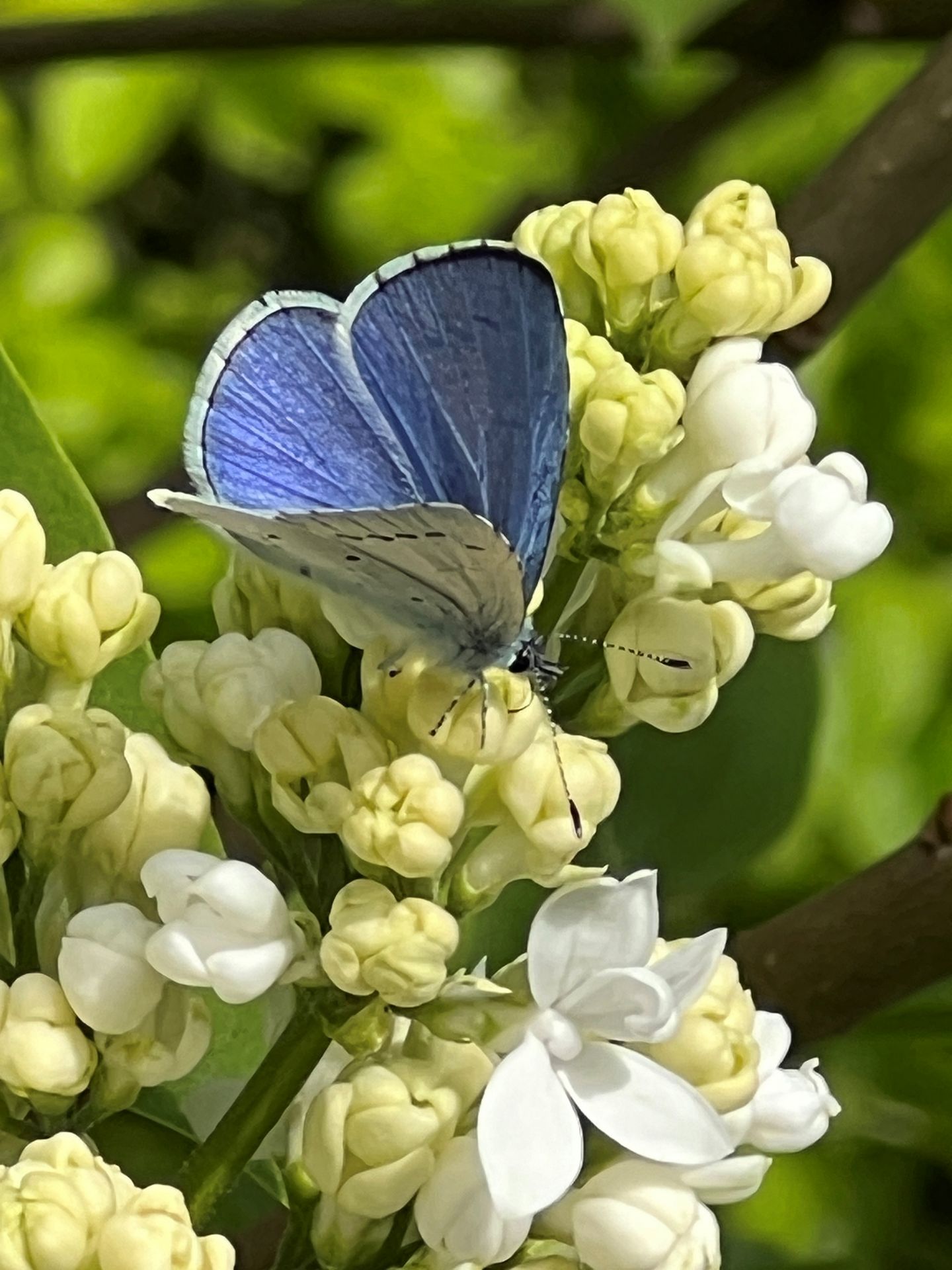
Holly Blue*
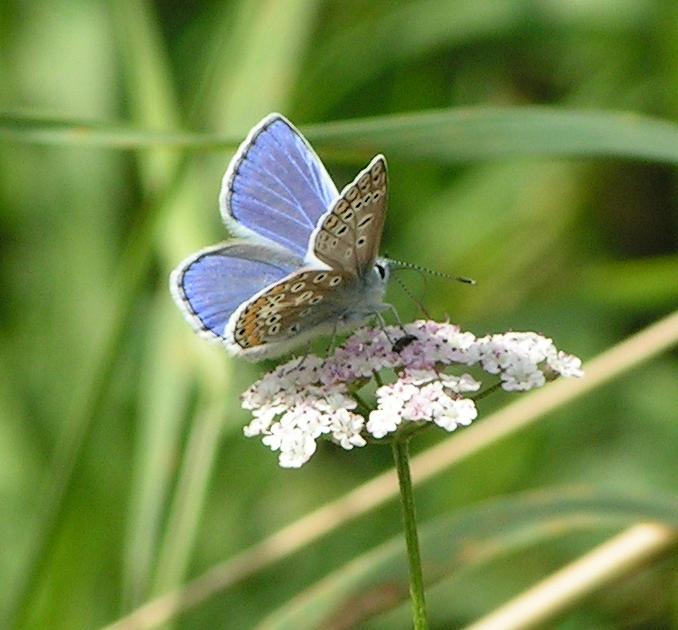
Common Blue*
Adonis Blue**
Silver-studded Blue
Chalk Hill Blue
Large Blue
Small Blue
* means I've photographed it where we live
** means I've photographed it in the Algarve but is effectively the same as the UK butterfly
But the butterflies included in the UK Family of Lycaenidae also include the following:
Brown Argus*
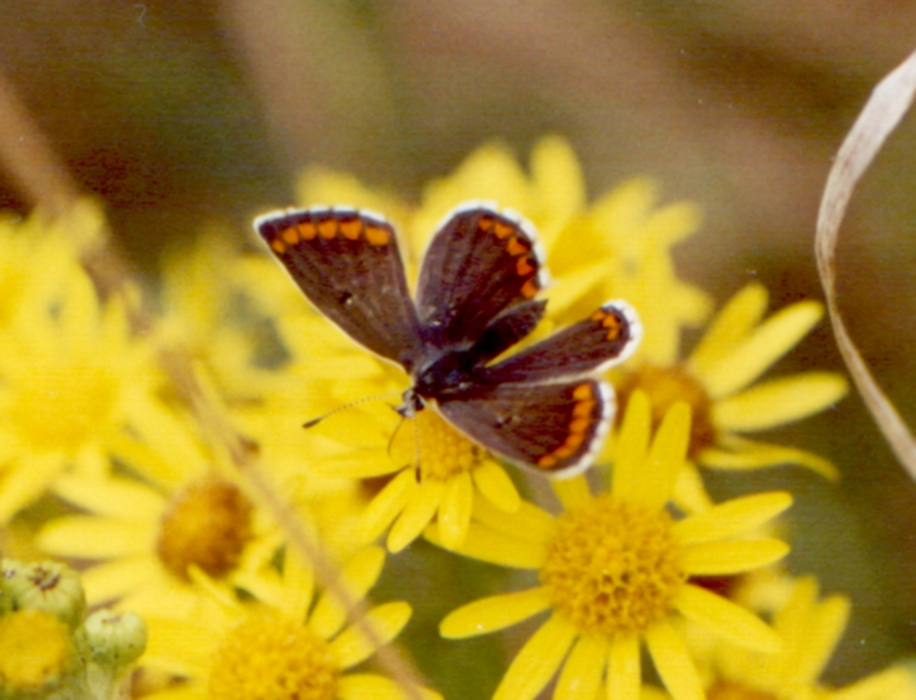
Northern Brown Argus
Small Copper*

Large Copper (effectively extinct)
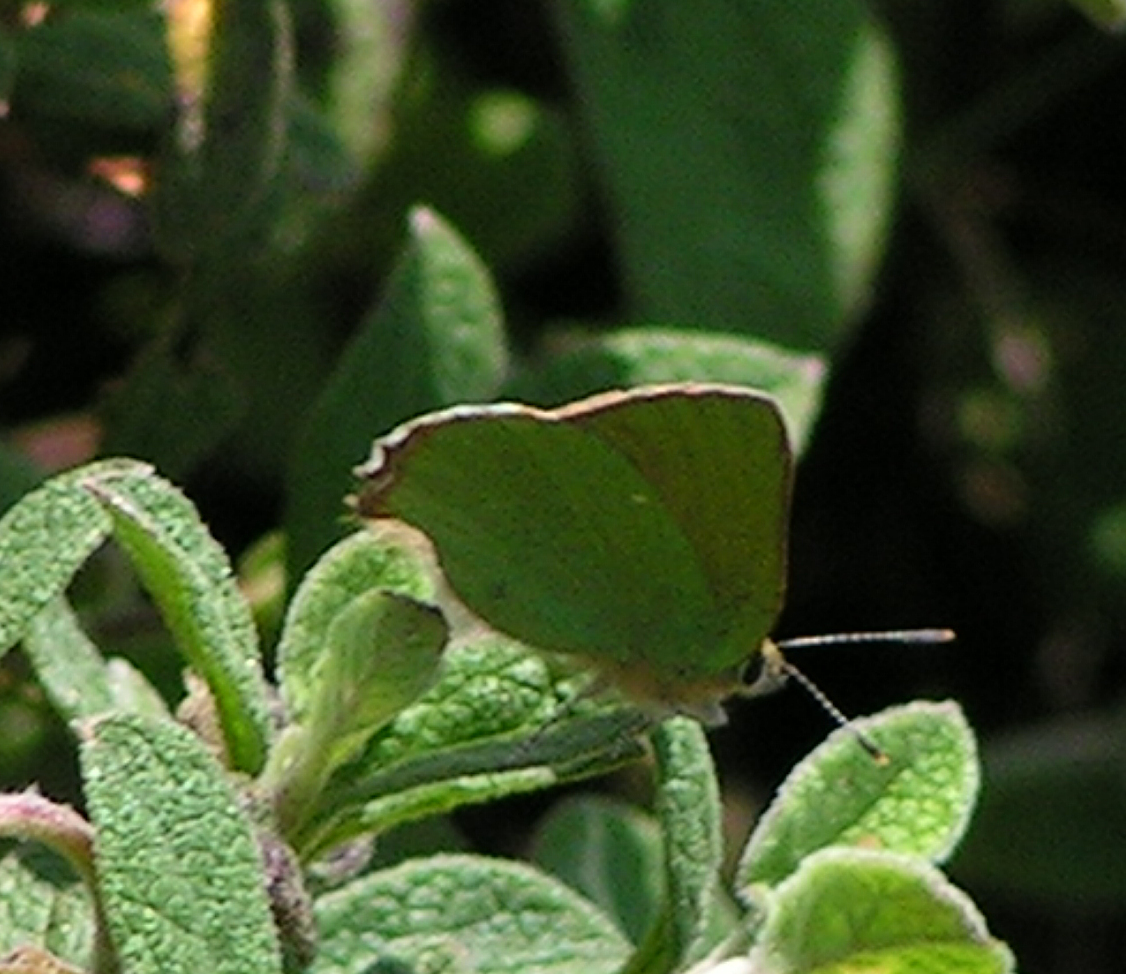
Green Hairstreak**
Brown Hairstreak
Black Hairstreak
White-letter Hairstreak
Purple Hairstreak
Of all these, the Purple Hairstreak actually does have a bluish sheen to its upper wings!
So back to the 'true blues' and this is where it can get interesting as well as confusing when it comes to identification. Male and females can be different colours! The male Common Blue is indeed a gorgeous blue as is the male Silver-studded Blue but the females are instead brown. So much so that they can often be mistaken for the Brown Argus or Northern Brown Argus (which as their names implies really are brown, both sexes), especially so the female Common Blue!
The male Adonis Blue is also an electric blue colour (quite striking!) but again the female is brown with a dusting of blue but in this case both male and female have strong white borders with black ticks and spots so can't be easily mistaken for the Brown Argus. Plus as a helpful aside, the female Adonis Butterflies are usually larger than the Brown Argus!
How can you decide if you are seeing a female Common Blue or a Brown Argus then?
It's all down to paying attention to the subtle differences on their upper wings but more importantly their underwing markings. For female Common Blues the upper wings are brown with a bluish sheen and has orange spots running along the base of the wings with white spots with black spots inside. With the Brown Argus (M&F) the orange spots have black spots and no white spots. Incidentally the female Silver-studded Blue has little or no orange spots on the forewings and only subtle tiny black spots. Fading of the colours can also make it difficult to identify between them. Adding another twist is that the female Common Blues can also be blue and may have a lot of variation even at the same site just to add to the fun.
They don't make it easy, do they!
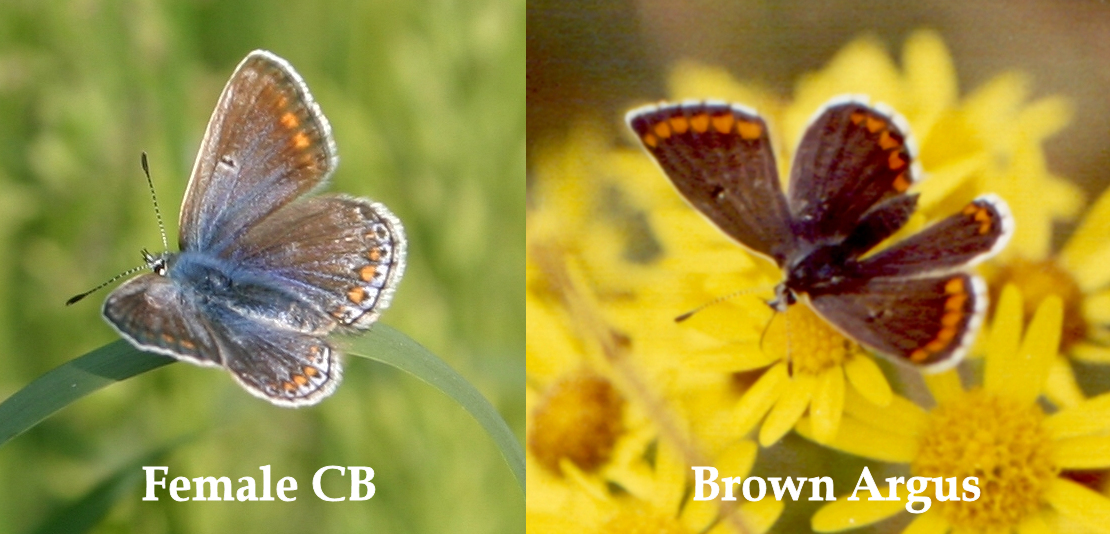
The undersides however are the prime giveaway which is why it is important to get a picture of the undersides to confirm identification as shown below.
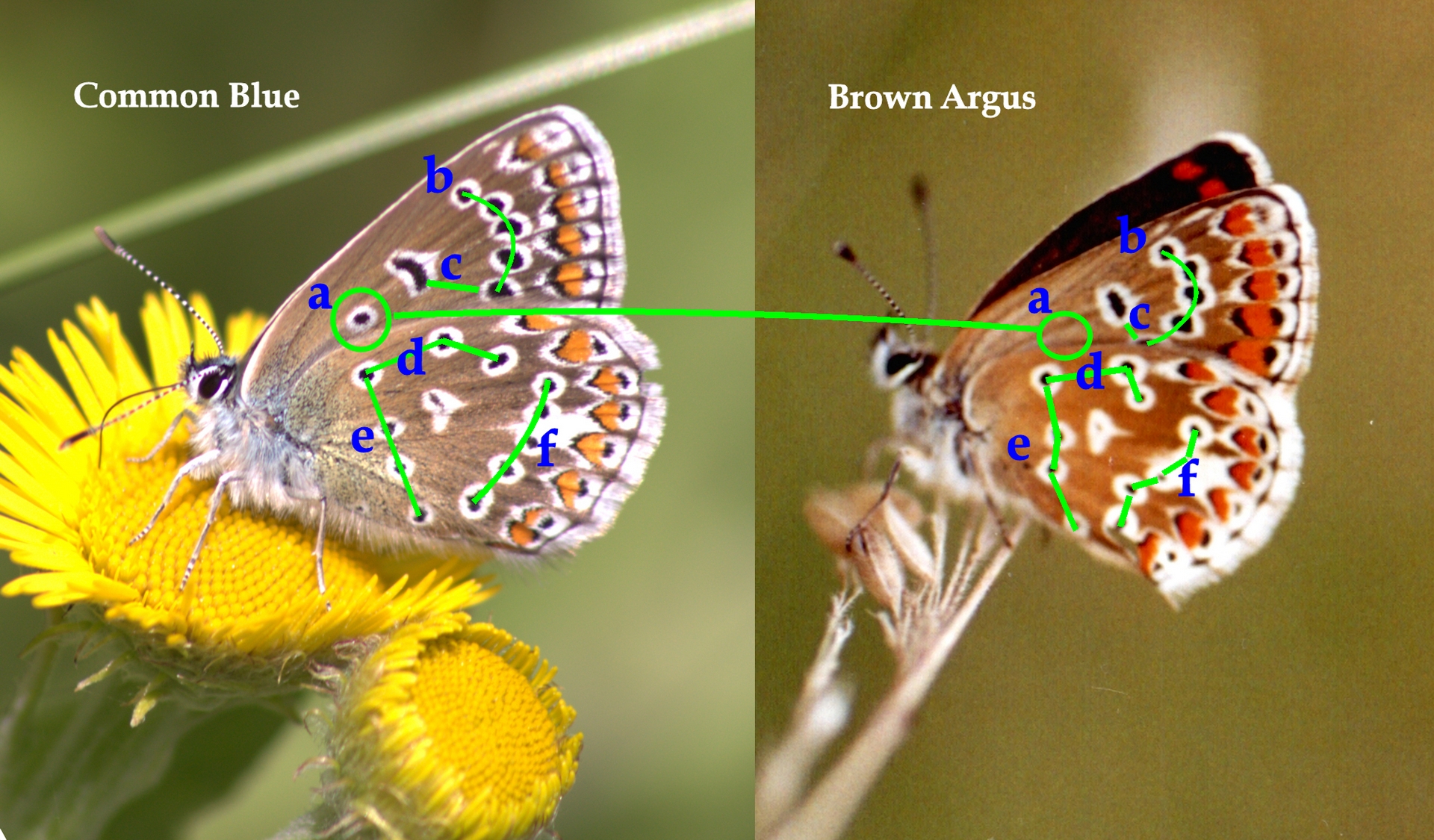
Spot 'a' on the Common Blue (CB) is absent on the Brown Argus (BA). Curve 'b' is much stronger on the Brown Argus which also results in the gap marked 'c' being shorter on the Brown Argus.
The three spots at the top of the hind wing 'd' is a shallow triangle on the Common Blue but almost a right angle on the Brown Argus whilst the line of spots 'e' is straight on the CB but wiggly on the BA. Finally line 'f' spots are slightly curved on the CB but again more wiggly on the BA.
Note that the Brown Argus is a bit more orange-brown and the orange of the spots are also deeper - almost red, note, however, that fading as they age/or weather worn can affect the colours. Finally there is a dusting of blue hairs on the forward part of the body on the CB but less so on the BA.
So what about the difference between the male and female Holly Blues?
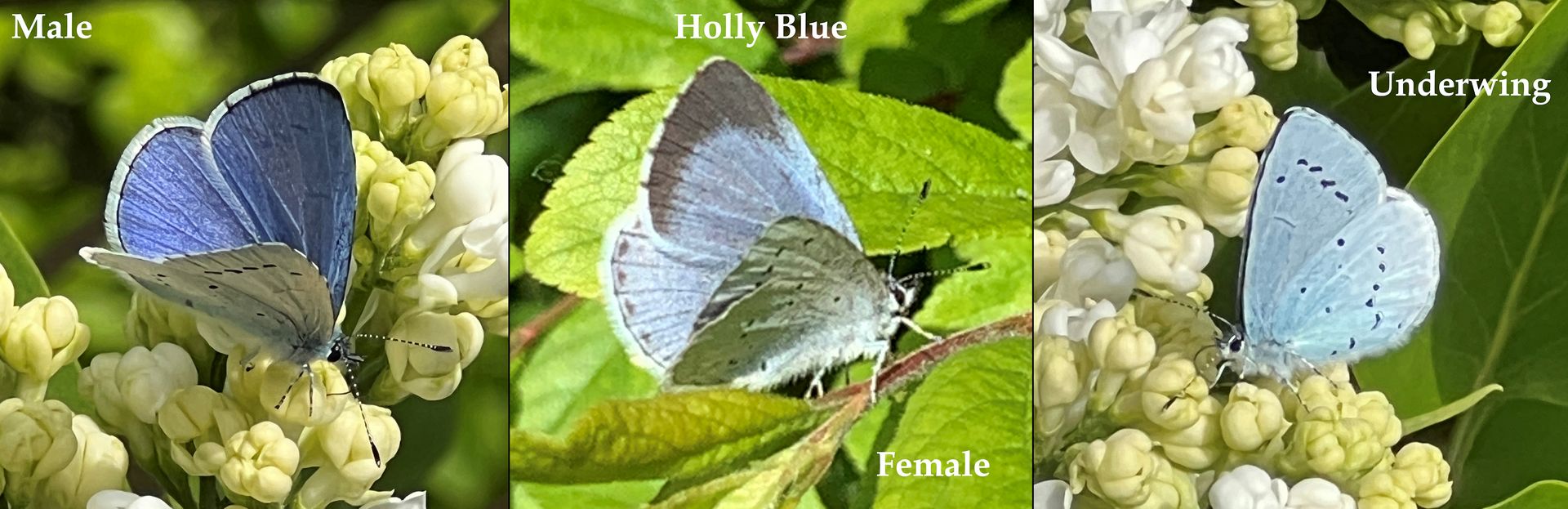
As can be seen above, the female has large dark section on the tip of the forewing upper surface whilst the male is completely blue and the female also has black spots on the hind wing. The underwings on both are almost the same being a silvery blue with small black spots and some looking like dashes. So the female isn't brown! Note the pictures of them are taken at different dates and times so although the blue on the female looks lighter it normally does look as nearly as bright as in the male.
I don't have pictures of the Silver-studded Blue or the Chalk Hill Blue of my own to compare but I have several reference books that show the upper and undersides shown below.
In a discussion with fellow Butterfly enthusiast, Tim Bates he comments: 'The most difficult comparison late in the season is often distinguishing between the female Chalk Hill with the second gen female Adonis, once they are both on the wing at shared sites. Indeed even the males of each species struggle with that so it seems.'
So next time you see a blue butterfly on the wing or resting - double check its markings if you can so you know which one you've really seen!
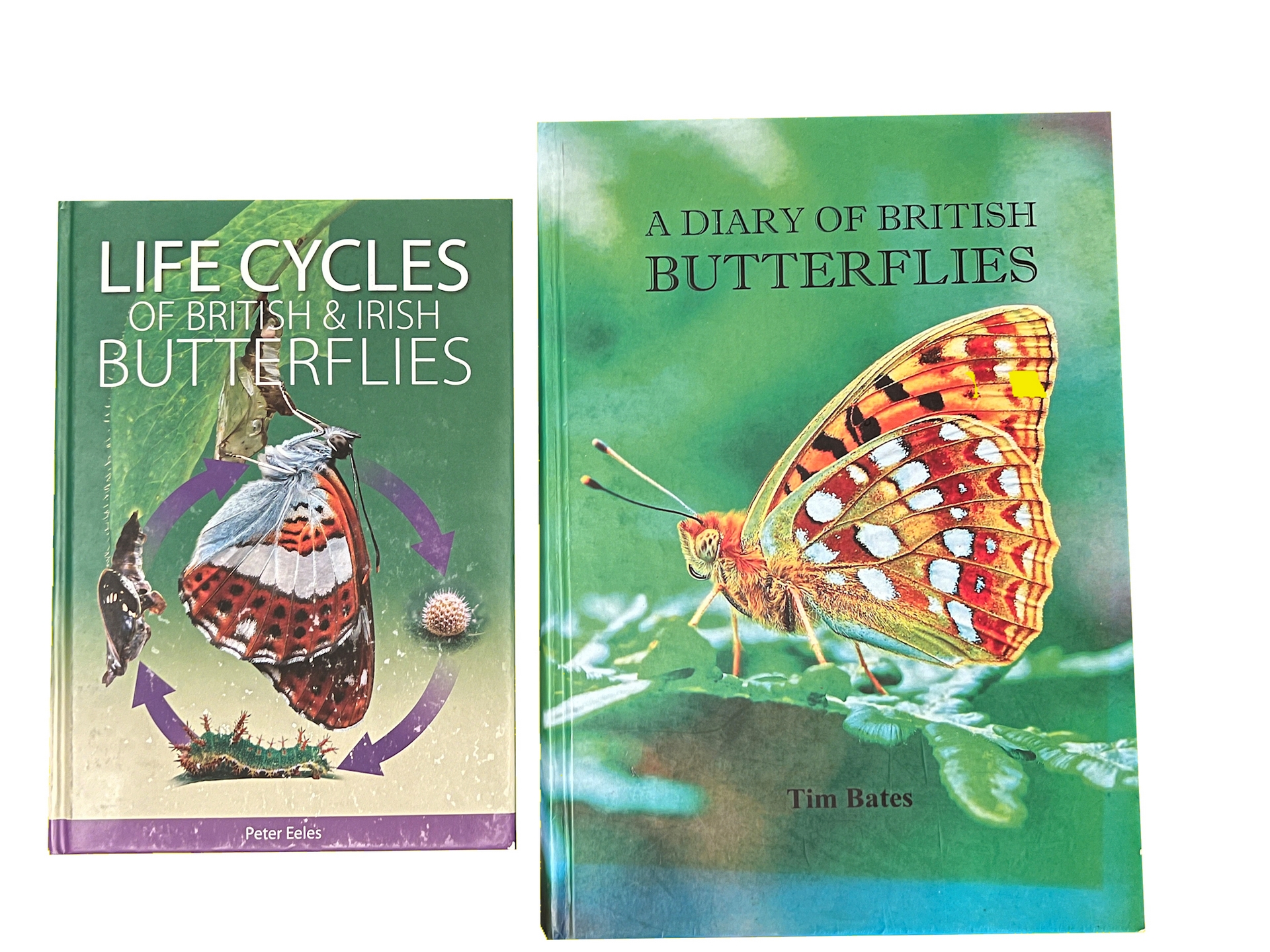
The books:
Life Cycles of British and Irish Butterflies by Peter Eeles: ISBN 978-1-874357-89-9
https://www.amazon.co.uk/Life-Cycles-British-Irish-Butterflies/dp/1874357889
Tim's excellent (large hardback) book 'A Diary of British Butterflies' can be obtained from him by emailing: tim4gepromotions@gmail.com
There is also our Butterfly and Moth section of the Astrospace website:
https://www.astrospace.co.uk/Butterflies/