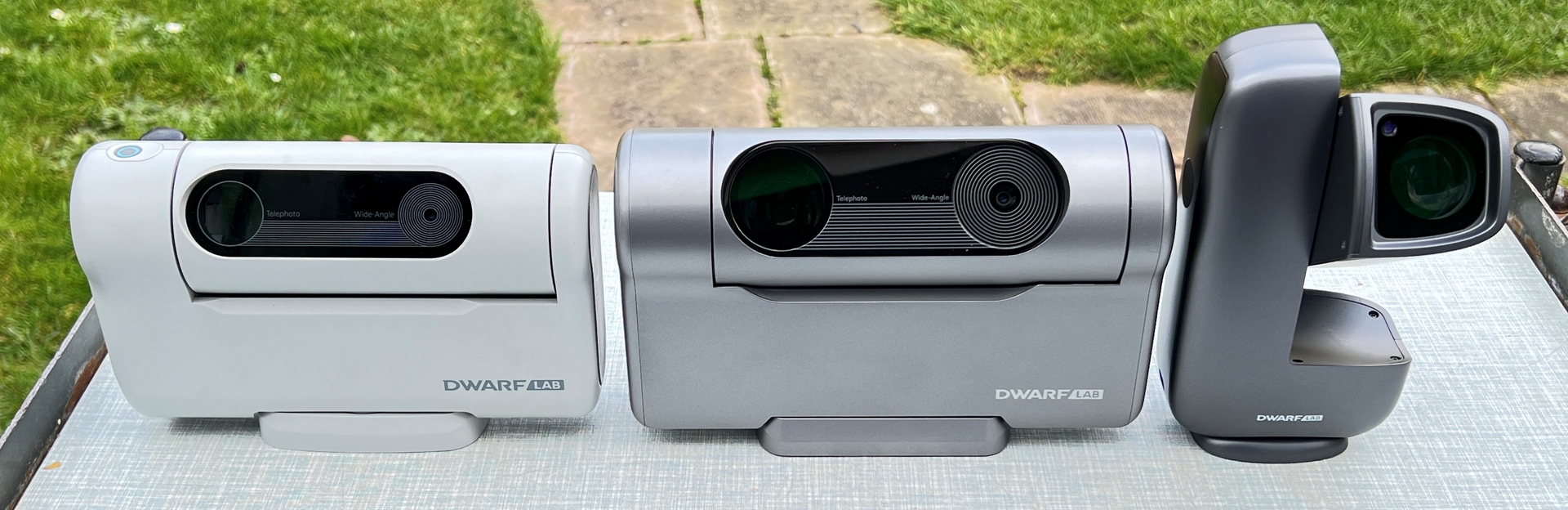
Are Smart Telescopes the end of traditional astrophotography?
This is a question, or words to that effect, that is cropping up quite a lot in the last few years and deserves a little (or a lot) of scrutiny.
Smart Telescopes are an all in one astro imaging telescope that can plate solve the sky, track and combine images and darks in one compact unit that doesn't require anything other than a tripod and a link to an app on your smartphone or tablet.
Once set up, you can usually leave it imaging the sky and go in, have a cup of tea or coffee, even watch a movie or a few episodes of your favourite TV shows in the comfort of your home.
Count me in!
Advanced astrophotographers: does that sound familiar to those of you who have set up and automated your systems?
It should do as it is exactly the same principle. Now, for the moment most smart telescopes are fairly small (but see later) and there is nothing wrong with those who have taken the time and spent the money on getting their astrophotography set up to be as convenient as possible for them using traditional equipment and automation. In many cases it really helps, if and when, you find setting up your equipment a hassle. Perhaps due to age and/or health issues that otherwise could bring to a halt your ability to image the wonders of the night sky.
Images which clearly bring pleasure to those who undertake it and to those whom you share your images with on social media platforms.
So why do I see some astrophotographers bad mouthing and dragging down smart telescopes when such instruments are an evolution of what they themselves are already doing, but making it available to far more people to discover a love of imaging the night sky?
Perhaps it's down to jealousy, after all they have worked hard to build up the equipment needed as well as spending what is often a considerable amount of money and time in the process, along with learning how to use complicated software to process their images.
Then someone buys a smart telescope and using an app begins to take astrophoto's of nebula, galaxies, clusters etc and with hardly any experience. It's not fair, is it?
So the diehards resort to claiming those smart telescope users are not true astrophotographers at all.
But here's the thing:
A very brief astro history lesson:
First there was naked eye observing way back when there was no technology.
Then came fixed sighting lines to time the transits of stars to refine their positions. Then came the refracting telescope, new technology that enabled you to see farther than ever before, first used to magnify terrestrial views then this new technology was turned to the heavens and wonders were discovered beyond our wildest imaginations.
As these new fangled telescopes were refined, reflecting telescopes were invented (good ol' Isaac Newton - a Lincolnshire chap you know!). Each advancement was the next level of adding more technology to allow the user to experience the night sky in ever increasing detail.
Then an even bigger advancement, not in the telescopes themselves but how they were mounted as mechanical mounts using clockwork motors enabled a telescope to follow the motion and turning of the night sky.
Then came a way of not just drawing what was seen at the eyepiece but something at the time even more extraordinary: photography. It is believed that Louis Daguerre was the first person to photograph the Moon creating a Daguerreotype on 2nd January 1839, however, the photograph was lost in a fire a couple of months later. The first verifiable astro image was of the Moon by Henry Draper a year later using a Daguerreotype in 1840.
Camera and photographic improvements then led to the first photographs of a star (Vega in 1850 by John Adams Whipple and William Cranch Bond) then Henry Draper photographed the Orion nebula in 1880.
Since those heady days, which effectively lay with people we would now call professional astronomers, that technology gradually became much more widely available to ordinary amateurs such as myself and many of my astronomical friends.
And it seems to me that at this point we begin to see a split between those amateurs who use the technology for 'serious scientific studies' and those who simply enjoy looking at and imaging the night sky for pleasure. Don't get me wrong, I think those who use their time, money, effort and equipment to record scientifically valid data are brilliant and good for them.
So, a confession: I was originally one of those who was not happy with a new fangled technology that became available to us mere amateurs: GoTo mounts. The argument was that such mounts took the 'fun' out of using setting circles and star hopping using traditional star maps under a red light torch under freezing cold, clear, nights. You should 'learn the night sky' to find your way around etc etc.
Then I reviewed a GoTo system and in one fell swoop I fell in love with the mount and ended up buying it. Instead of wasting precious clear skies searching for my target, the GoTo mount slewed the telescope and put it in the field of view (FOV). Suddenly I was more productive. I could view a whole range of targets in one night, image a few rather than spend time guiding just to get one image.
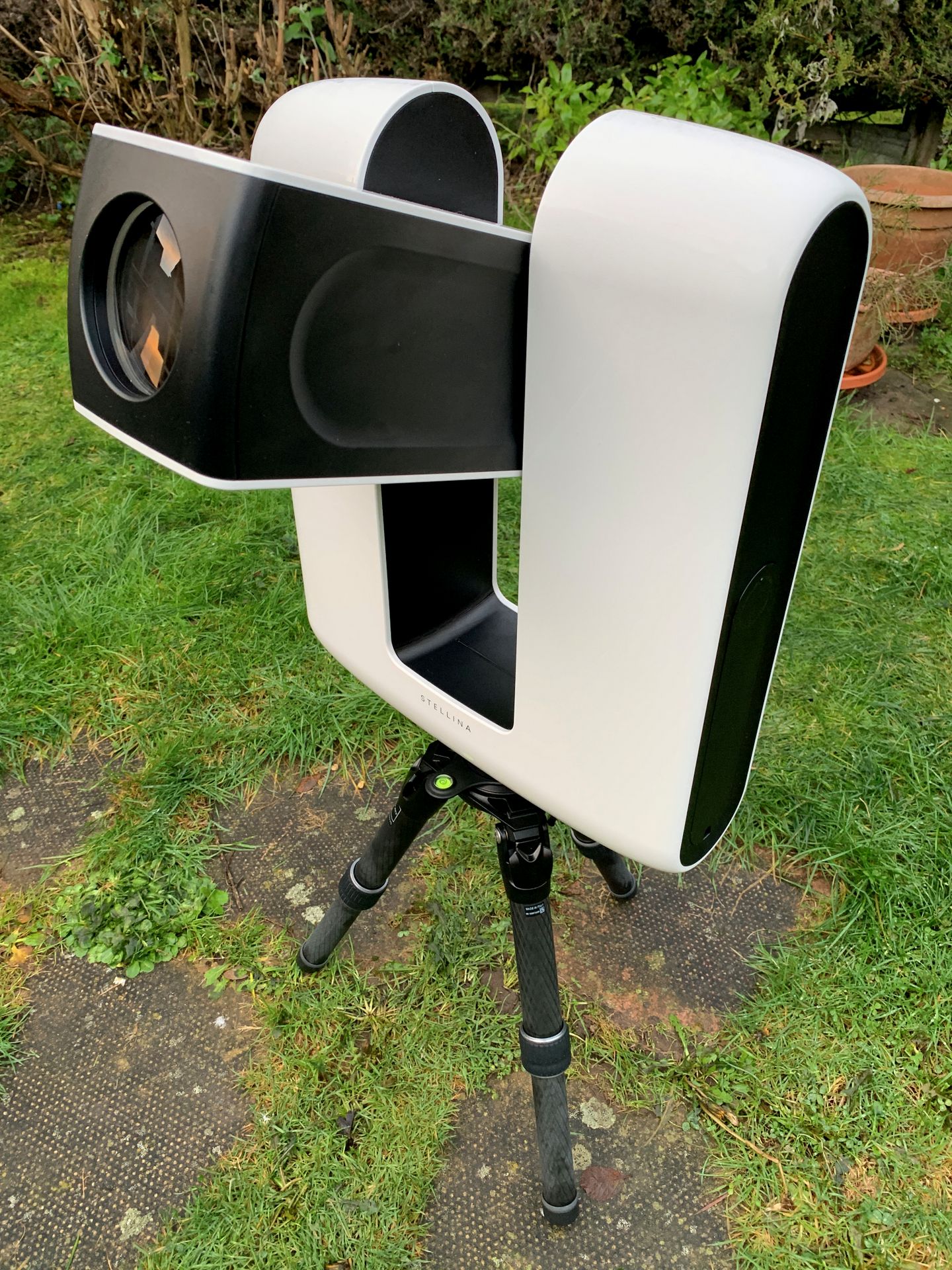 Vaonis Stellina smart telescope, 2020.
And now, that's where smart telescopes enter as I was lucky enough to do one of the first reviews in the UK of a smart telescope, the Vaonis Stellina smart telescope. And I was impressed, yes it couldn't take the place of a decent astro imaging rig at the time, but it showed promise and I could immediately see it wouldn't take long before newer models would come along with other manufacturers joining in.
And I was right.
So now we have Vaonis, DwarfLab, Unistellar, ZW0 and Celestron all with interesting models with increasingly impressive credentials. The latest versions offer larger aperture and imaging capabilities such as the SeeStar 50 Pro, the Celestron Origin (an 6 inch aperture smart telescope!) and the recently launched Dwarflab Draco.
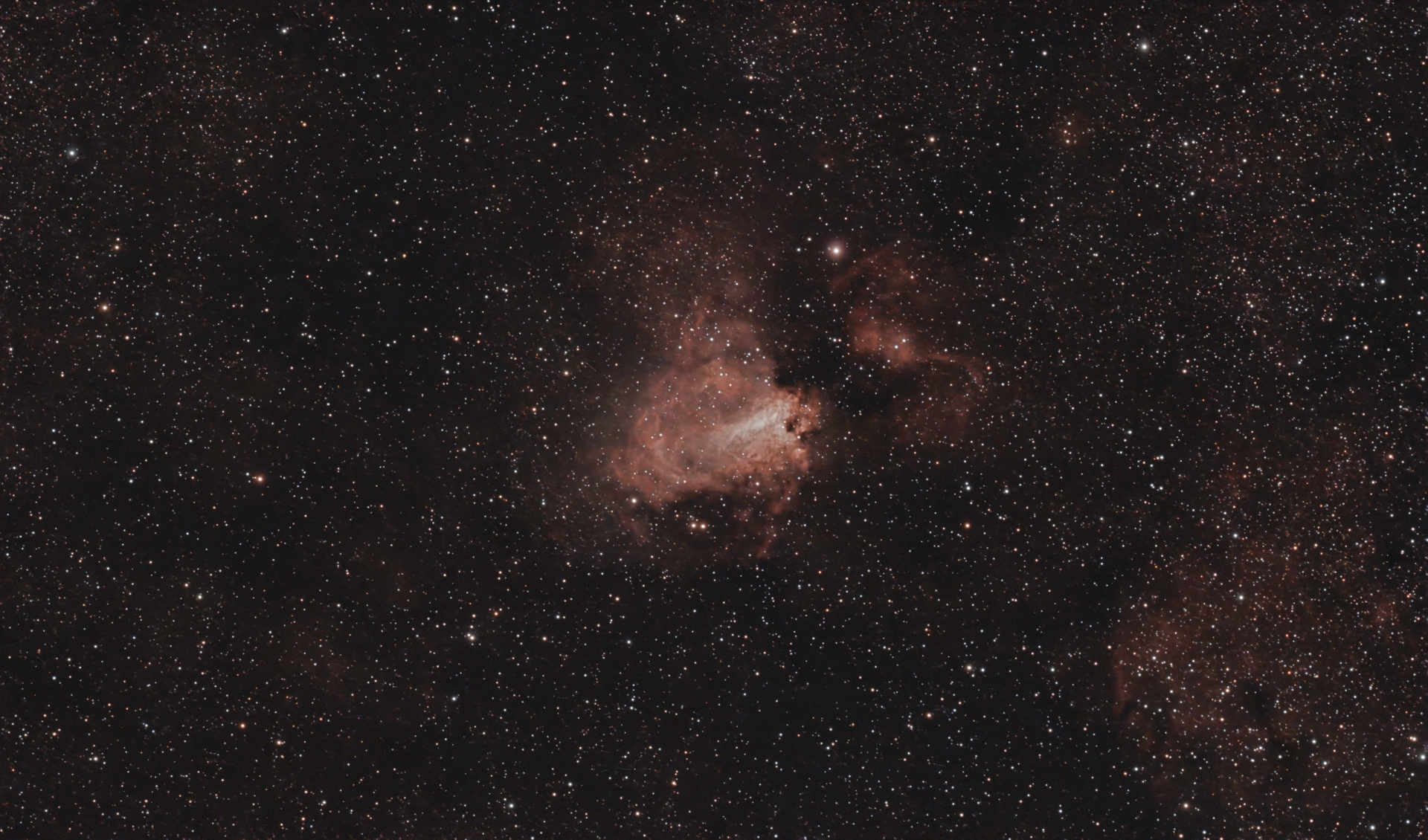
Messier 17 imaged with the Dwarf 3 from Borrowdale. 94 images of 30seconds exposure @ gain 80.
Personally my Dwarflab 3 hasn't stopped me using my other astro equipment, they each have their own uses depending upon what I wish to achieve.
So the Smart revolution is well under way and I for one welcome it!
Disclaimer: I am in no way affiliated with Dwarflab or any of the other smart telescope manufacturers and the above is my personal opinion.
Note original post stated a Celestron Origin was an 8 inch aperture but it is now corrected to a 6 inch.